


Short answer: Selecting a wedding caterer is a step-by-step process that starts with setting your budget and vision, moves through research and tastings, and ends with finding the right team to bring your wedding day to life. The right caterer shapes the food, the service, and the rhythm of your wedding day, which means this is one of the most important decisions in the entire wedding planning process.
Before you contact a single caterer, get clear on three things: your budget, your guest count, and your wedding style.
Wedding catering averages around $80 per person nationally, and it is one of the largest line items in a wedding budget, so this number drives almost every conversation that follows. A realistic estimate of your guest count helps too, because no caterer can quote you accurately for “around 100 to 200 people.” Aim for a tight range. Then think about your wedding vision: formal black-tie reception, casual beach wedding, family-style backyard celebration, or something in between. Your wedding day style will influence both the food and the service.
While you are at it, write down your priorities. Food quality, presentation, dietary needs, signature drinks, the wedding cake, and the level of service are all worth ranking before you start interviewing. The clearer your vision, the easier it is for a caterer to bring it to life.
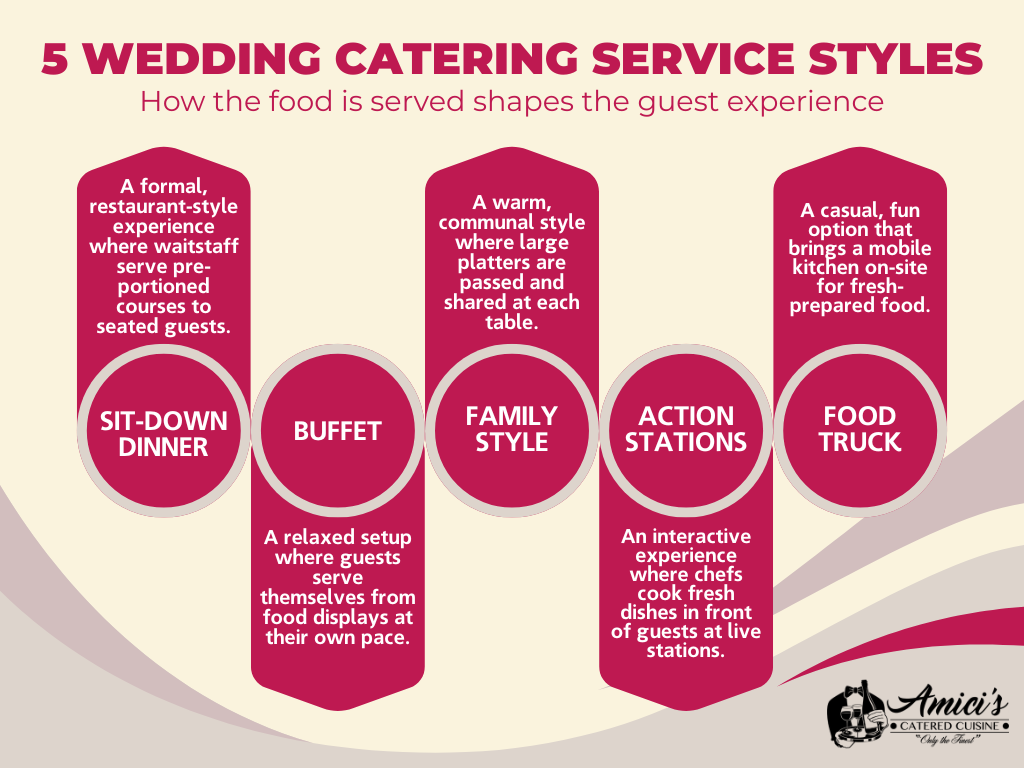
Service style shapes how guests experience the meal, and it directly affects your budget and staffing needs.
There are five main service styles to choose from. Each one shapes how guests experience the meal and affects your budget, staffing, and venue setup.
Sit-down dinner Also called plated service, this is the most formal option. Each guest is seated and served pre-portioned courses by waitstaff. Best for: Black-tie weddings and formal receptions where presentation matters as much as the food itself.
Buffet Guests serve themselves from food displays, with multiple proteins, sides, and salads in one continuous setup. Best for: Larger guest counts and casual weddings where flexibility and variety are priorities.
Family style Large platters are brought to each table for guests to pass and share, which feels warm and communal. Best for: Intimate weddings, rustic celebrations, and couples who want a relaxed, conversation-driven meal.
Action stations Chefs prepare food in front of guests at pasta stations, carving stations, or sushi bars, turning the food into part of the entertainment. Best for: Modern weddings and cocktail-style receptions where guests want to mingle and watch the food come together.
Food truck A mobile kitchen pulls up to the venue and prepares food fresh on-site. Best for: Outdoor weddings, late-night snack moments, and casual receptions that lean fun over formal.
Many couples blend two or more styles, such as passed hors d’oeuvres during cocktail hour followed by a family style dinner. Talk through the options with your caterer to find a combination that fits your wedding venue, guest count, and overall vibe.
Once your budget and style are set, it is time to find a wedding caterer worth meeting in person.
Start with your wedding venue. Most venues maintain a preferred vendor list, and the caterers on it already know the layout, kitchen access, and house rules. Next, ask your wedding planner, recently married friends, and other wedding vendors for recommendations. Online reviews on platforms like The Knot and WeddingWire give you another angle, especially when paired with photos from past weddings.
As you research, look at each catering company’s years in business, wedding portfolio, online reviews, and any awards or certifications. Caterers with deep experience and long-tenured staff tend to deliver more consistent results. Aim to narrow your list to three to five potential caterers before you start reaching out.
Your first message to each caterer should include your wedding date, venue, estimated guest count, service style preference, and a budget range. The more information you give upfront, the more useful their initial response will be.
Pay attention to how fast they respond. A wedding caterer who replies within a day or two and asks thoughtful follow-up questions is signaling how they will communicate throughout the planning process. Slow or vague responses are an early red flag.
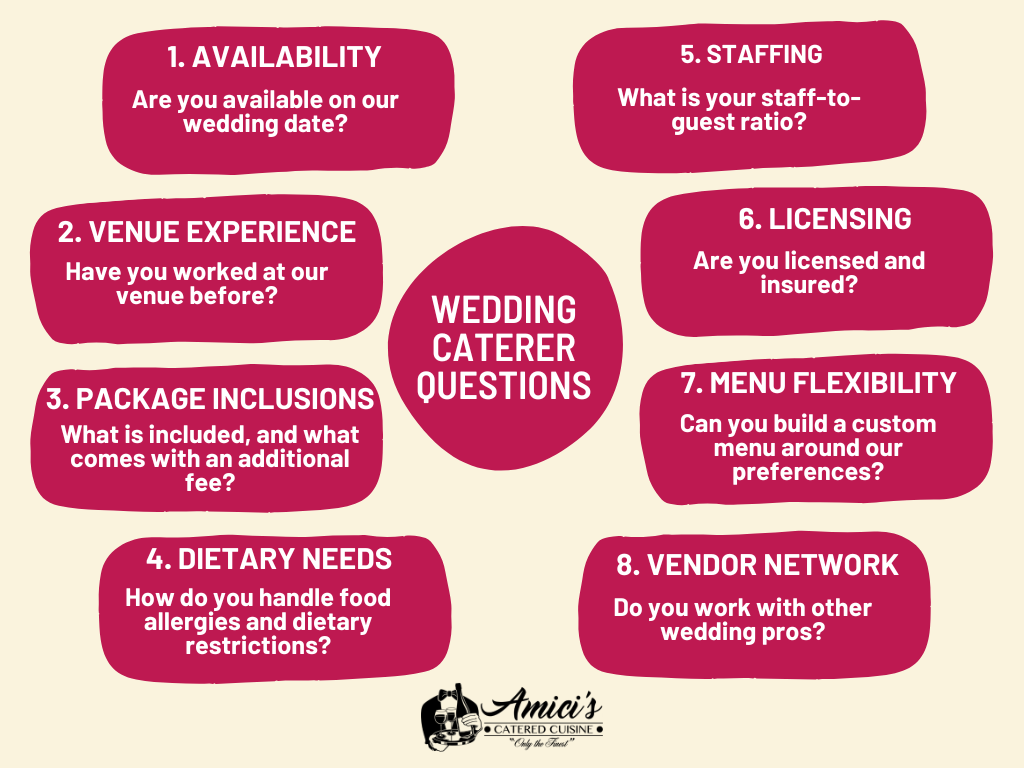
During the interview, ask the right questions:
For an extra layer of confidence, you can also ask food safety questions about how the caterer handles temperature control, transport, and cross-contamination.A great caterer will welcome these questions and answer them clearly.
After narrowing your shortlist to two or three favorites, schedule a tasting. This is one of the most enjoyable parts of wedding planning, and it tells you far more than any proposal ever will.
A wedding tasting is your chance to evaluate the food and the team behind it. Pay attention to flavor and seasoning, plating and presentation, portion size, and how the caterer responds to your feedback. Notice whether they offer ideas, suggest creative pairings, and welcome adjustments. This is also a great moment to discuss your wedding menu in detail, including the cocktail hour, main courses, and the wedding cake if they offer pastry services.
Bring two to four trusted people, take notes, and snap photos of the dishes you love. A reputable caterer will host the tasting before the contract is signed, giving you confidence the food will live up to your expectations.
Once you find the perfect wedding caterer, the final step is reviewing the proposal and signing the catering contract.
A complete proposal should spell out the final menu, per-person pricing, service style, staffing details, rentals, setup, service, and cleanup. Look closely for the payment schedule, the final guest count deadline, cancellation policy, weather contingency plans, and any service charges or gratuities.
If you’ve never reviewed a vendor agreement before, it helps to know what phrases to look out for in a wedding contract, like force majeure clauses, cancellation terms, and how additional fees are itemized. Confirm that proof of licensing and liability insurance is on file. If anything in the contract is unclear, ask for clarification before signing.
When you start comparing caterers side by side, watch for the qualities that separate a true full-service team from operators who cut corners:
When several of these line up in one catering company, you have likely found your match.
Most wedding catering quotes look similar on paper. The real difference shows up on the day of your wedding.
Here is what sets Amici’s apart from other Tampa Bay wedding caterers:
Long-tenured service team: Our kitchen and service staff average 15+ years with Amici’s, not temporary event hires. Repeat couples often request specific team members by name.
You taste your actual wedding menu: Other caterers run group tastings with standard samples. We build your private tasting around the exact menu you and your fiancé are considering.
Fully licensed, insured bartenders: Trained in responsible service to protect you, your venue, and your guests.
Fully customizable, pan-based menus: Our signature mix-and-match system combines items across Italian, BBQ, social, pasta station, and bar packages. The menu flexes around your vision, not the other way around.
Tampa Bay rooted since 1984: 2025 Hospitality Business of the Year, NMSDC-Certified Minority Business Enterprise, three-time NACE Caterer of the Year, and member of The Knot Best of Weddings Hall of Fame. We are the preferred caterer at over 100 banquet halls across Tampa, St. Petersburg, Clearwater, and the surrounding Pinellas, Pasco, and Hillsborough counties.
Invested in the community: Ongoing outreach including Thanksgiving meal programs for local youth and support for Tampa Bay healthcare workers.
If you are ready to find the right wedding caterer for your big day, we would love to talk. Fill out a form, call 813-855-1100, or email sales@amiciscatering.com to schedule a private tasting.
Let us bring the food, the hospitality, and the experience. You bring the love story.
Most couples book their wedding caterer 9 to 12 months before the wedding date, especially for peak season weddings between March and November. Tampa Bay’s most in-demand caterers fill their calendars quickly, so the sooner you start your search, the more options you will have. If you are planning an off-season or weekday wedding, you may have more flexibility with shorter lead times.
Yes, most reputable wedding caterers offer a tasting before the contract is signed. A tasting lets you evaluate the food, the presentation, and the team behind it before committing. Amici’s Catered Cuisine builds tastings around your actual wedding menu, so you sample the exact dishes your guests will be served on your wedding day rather than generic samples.
A good wedding caterer should be able to accommodate vegetarian, vegan, gluten-free, dairy-free, kosher, halal, and most major food allergies. During the interview process, ask how the caterer handles cross-contamination, ingredient labeling, and individual plate adjustments. The best caterers welcome these questions and treat dietary accommodations as a standard part of menu planning, not an afterthought.
Full-service wedding catering typically includes menu planning, food preparation, transportation, on-site cooking and plating, service staff, bartenders, setup, and cleanup. Higher-tier packages often add rentals such as linens, china, flatware, and glassware. Always confirm exactly what is included in your proposal and what comes with an additional fee before signing the contract.
Most caterers recommend bringing two to four trusted people to a tasting, such as your partner, a parent, or your wedding planner. Bringing too many opinions can make decision-making harder. Take notes, photograph the dishes you love, and ask the caterer about any adjustments you would like to see before the wedding day.


